Hey there! Welcome to Modern CJ Systems!
Built From Real Miles
Modern CJ Systems wasn’t built in a boardroom.
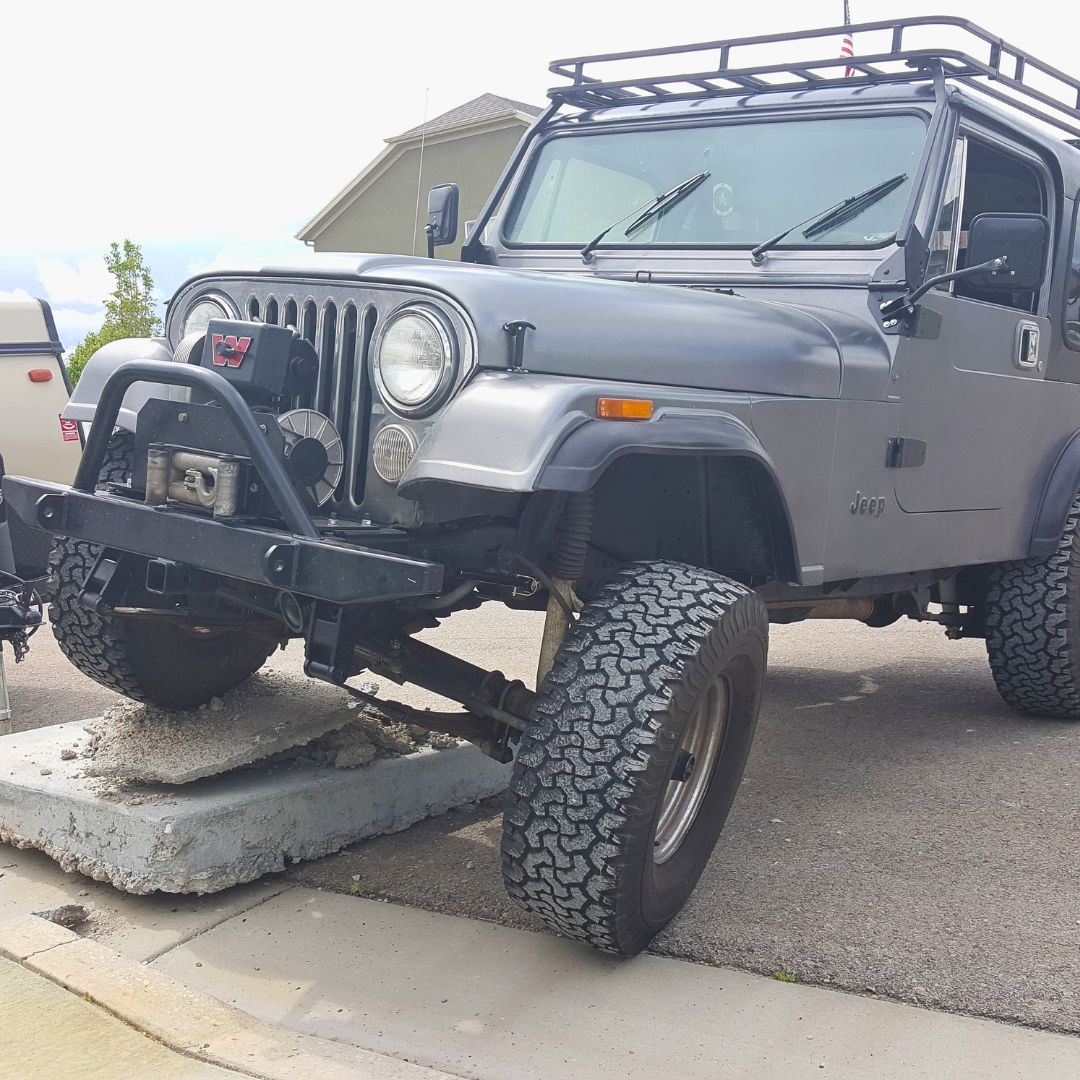
It was built around one CJ that’s been owned, rebuilt, upgraded, frustrated over, and driven again since 2006.
Just a classic CJ that’s been through engine work, wiring rewrites, steering upgrades, lifts, bigger tires, EFI swaps, and more than a few “I should’ve thought that through” moments.
Everything here comes from real installs, real mistakes, and real miles.
Built From Real Miles
Modern CJ Systems wasn’t built in a boardroom.
It was built around one CJ that’s been owned, rebuilt, upgraded, frustrated over, and driven again since 2006.
Just a classic CJ that’s been through engine work, wiring rewrites, steering upgrades, lifts, bigger tires, EFI swaps, and more than a few “I should’ve thought that through” moments.
Everything here comes from real installs, real mistakes, and real miles.
Why We Exist
Classic CJs are simple on purpose. That simplicity is what makes them great. But after 40+ years of wear, mixed parts, partial upgrades, and good intentions, most CJs aren’t simple anymore; they’re layered. Layered with small decisions that don’t always work together.
Over time, one thing became clear: most CJ problems aren’t caused by bad individual parts. They’re caused by incomplete thinking.
A CJ isn’t a parts bin. It’s a system. Steering affects safety and fatigue on the road. Electrical affects reliability and confidence. Cooling affects longevity. Gearing affects how the entire Jeep feels behind the wheel. Every change influences something else.
Lift it without correcting steering geometry, and it wanders. Upgrade electrical components without fixing grounds, and you’re still chasing gremlins. Add performance without reinforcing supporting systems, and something else becomes the weak link. That pattern shows up everywhere.
Modern CJ Systems exists to approach upgrades differently, by strengthening complete systems instead of stacking isolated parts.
Not a Catalog. A Framework.
There are still thousands of CJ parts available online, despite their age. That’s not the problem. The problem is knowing what to upgrade first, what to reinforce, and what to leave alone.
Most stores are built to move inventory. Modern CJ Systems is built to help you think through your build. Instead of pushing random upgrades, the focus here is on complete systems; upgrades that work together to strengthen weak points without changing the character of the Jeep.
The goal isn’t to overbuild. It isn’t to chase trends. It’s to improve drivability, reliability, and confidence while keeping what makes a CJ a CJ.
Better, not different.
Years Behind The Wheel
This philosophy wasn’t formed in a month, and it didn’t just come from just reading forums or watching build videos. It came from nearly two decades of owning and driving multiple CJs. Building them, upgrading them, living with the results, and sometimes redoing things that didn’t work as expected.
Some upgrades made an immediate difference. Others revealed new problems a few months later. A lift changed more than ride height. Bigger tires changed more than appearance. Electrical upgrades solved one issue and exposed another. Over time, patterns started to show up.
The biggest lesson? Balance matters more than parts lists.
The upgrades that truly improved the Jeep weren’t the flashiest. They were the ones that strengthened weak points and worked with the rest of the system.
That experience - the wins, the frustrations, the re-thinking - is what shapes everything here.
Years Behind The Wheel
This philosophy wasn’t formed in a month, and it didn’t just come from just reading forums or watching build videos. It came from nearly two decades of owning and driving multiple CJs. Building them, upgrading them, living with the results, and sometimes redoing things that didn’t work as expected.
Some upgrades made an immediate difference. Others revealed new problems a few months later. A lift changed more than ride height. Bigger tires changed more than appearance. Electrical upgrades solved one issue and exposed another. Over time, patterns started to show up.
The biggest lesson? Balance matters more than parts lists.
The upgrades that truly improved the Jeep weren’t the flashiest. They were the ones that strengthened weak points and worked with the rest of the system.
That experience - the wins, the frustrations, the re-thinking - is what shapes everything here.
Start With What Matters Most
If you’re ready to improve your CJ, don’t start with what looks impressive. Start with what changes how it feels to drive.
For some, that’s steering stability. For others, it’s electrical reliability or cooling confidence. Every Jeep is a little different, but the principle stays the same: strengthen the foundation before stacking upgrades on top of it.
When the core systems are solid, everything else works better. That’s where this platform begins.
Explore the systems. Understand how they work together. Upgrade with intention. Build it better. Keep it a CJ.
© 2026. Modern CJ Systems